A SINGLE SEQUENCE
duo-exhibition with Yesul Lee at Haus der Stadtgeschichte, Offenbach a.M, 15.1.-5.2.2026, curated by Mike Schäfer, Pierre Verago and Jule Wertheimer, supported by Liebelt Stiftung, Hamburg
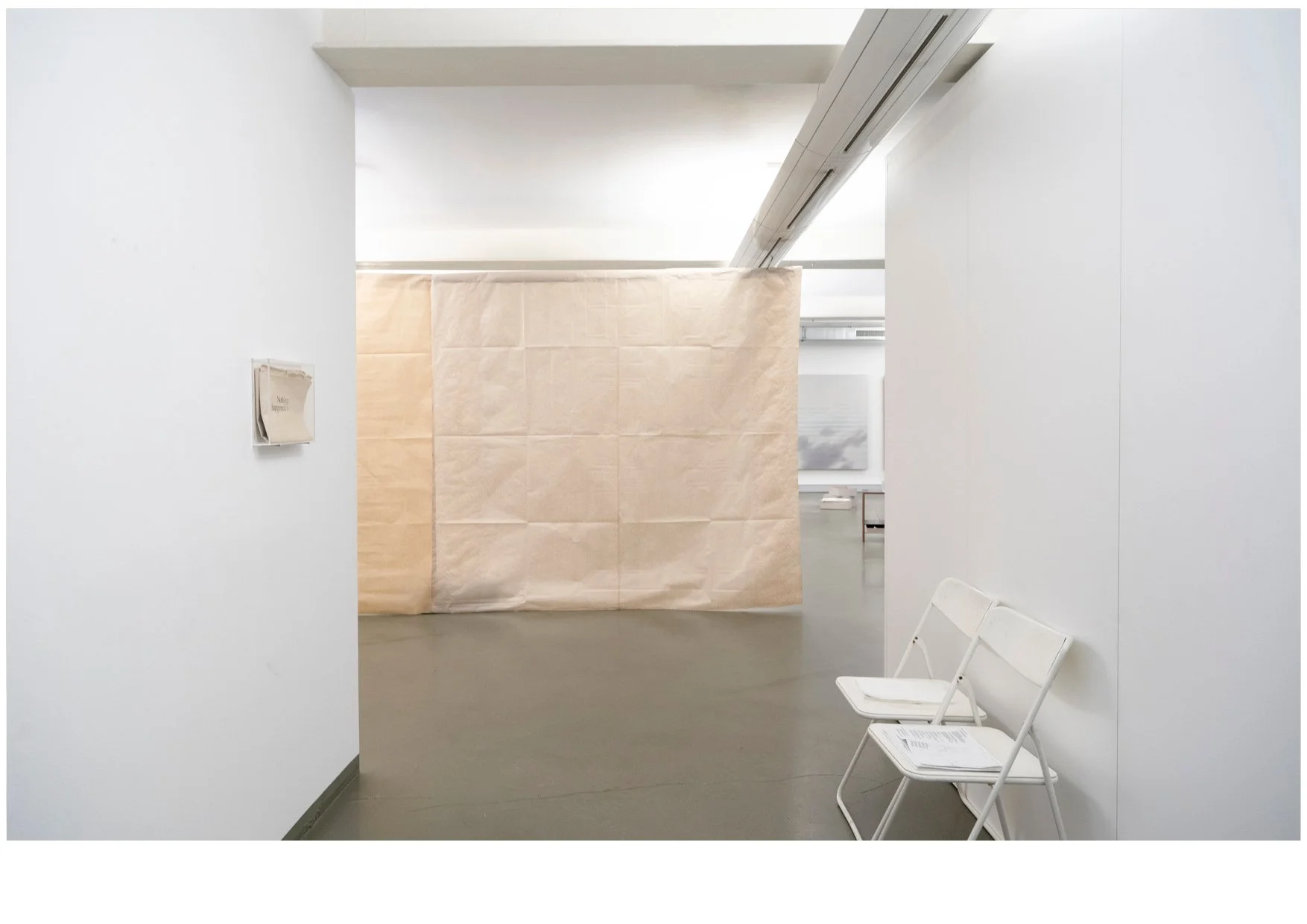
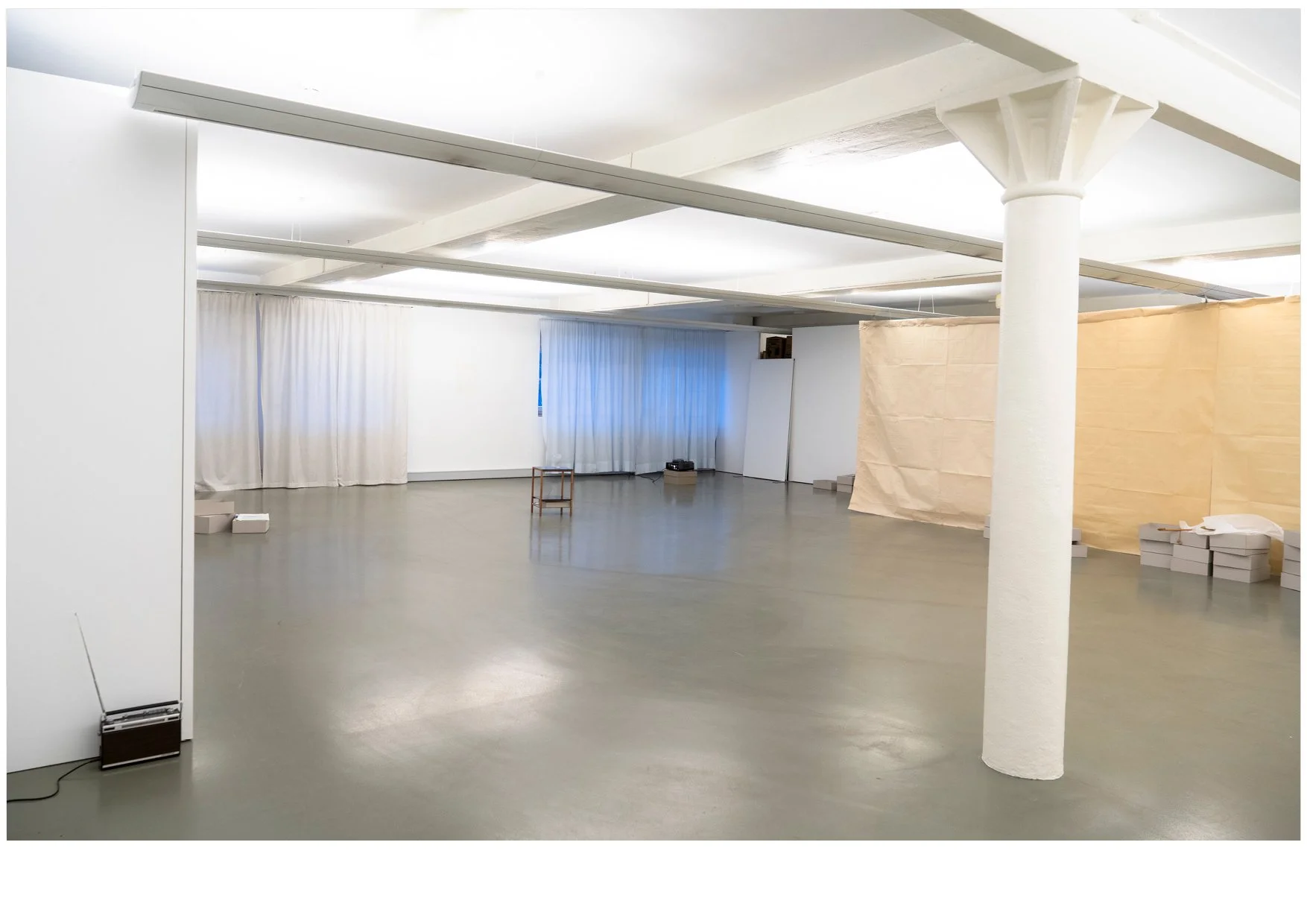
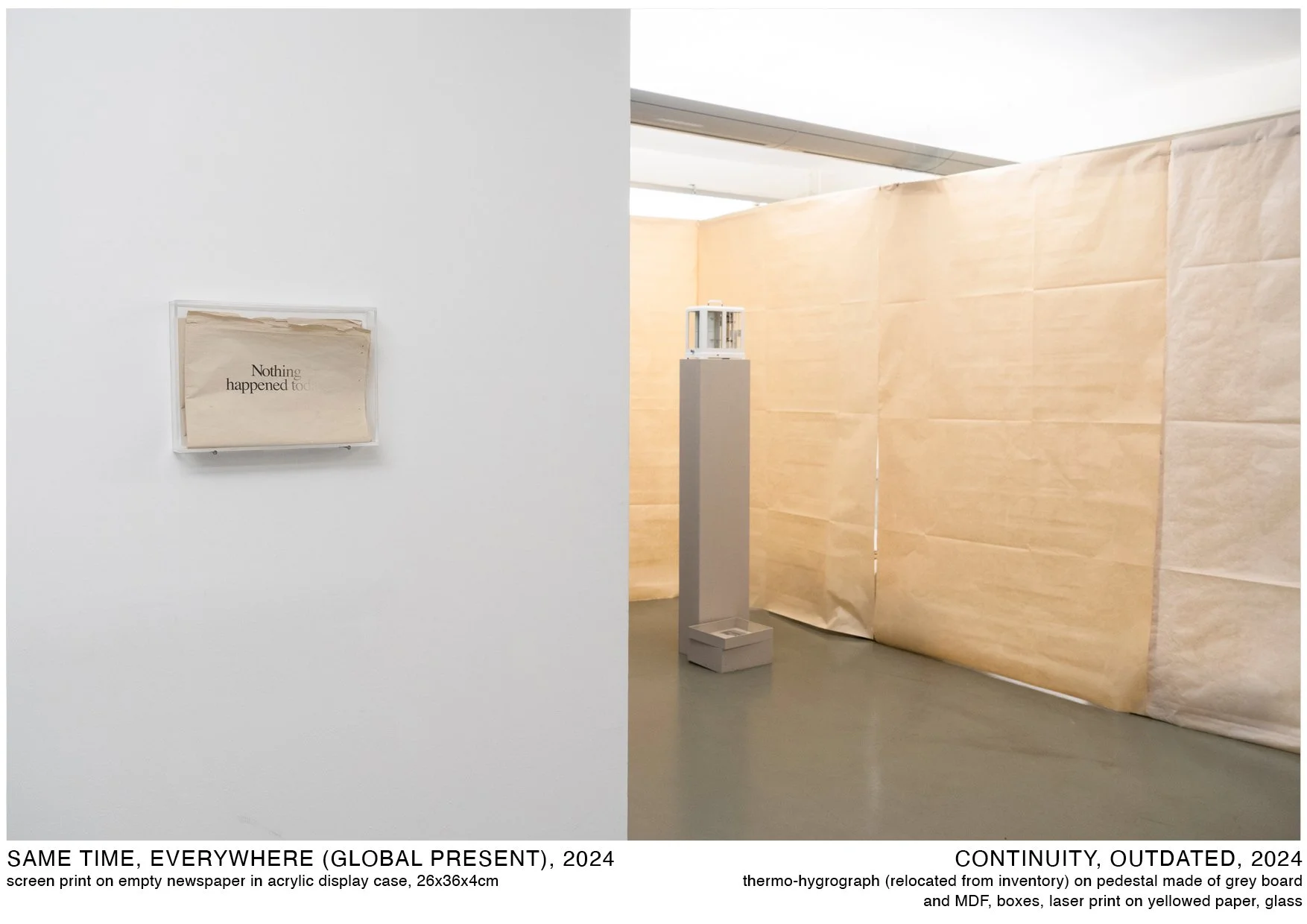
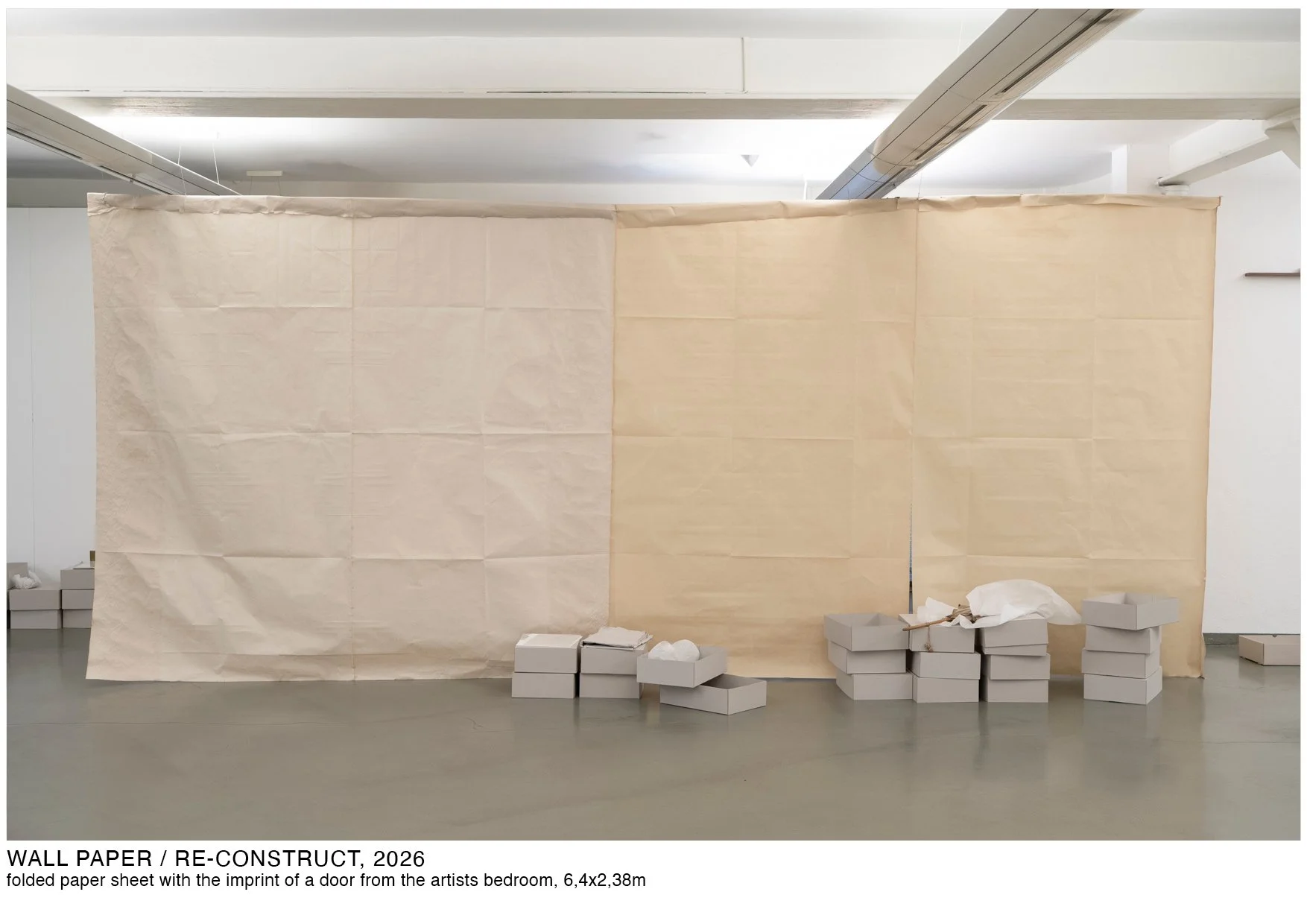
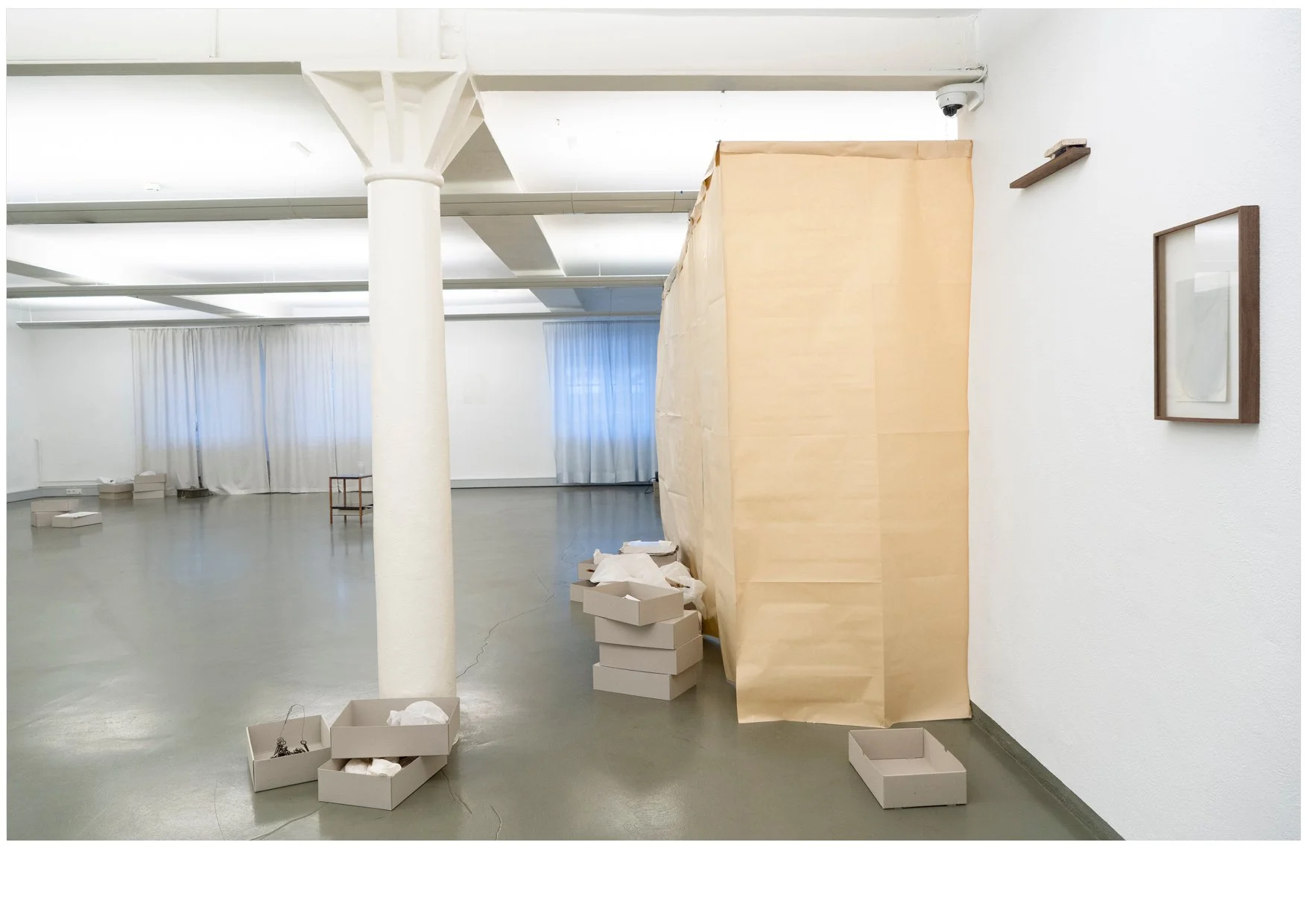
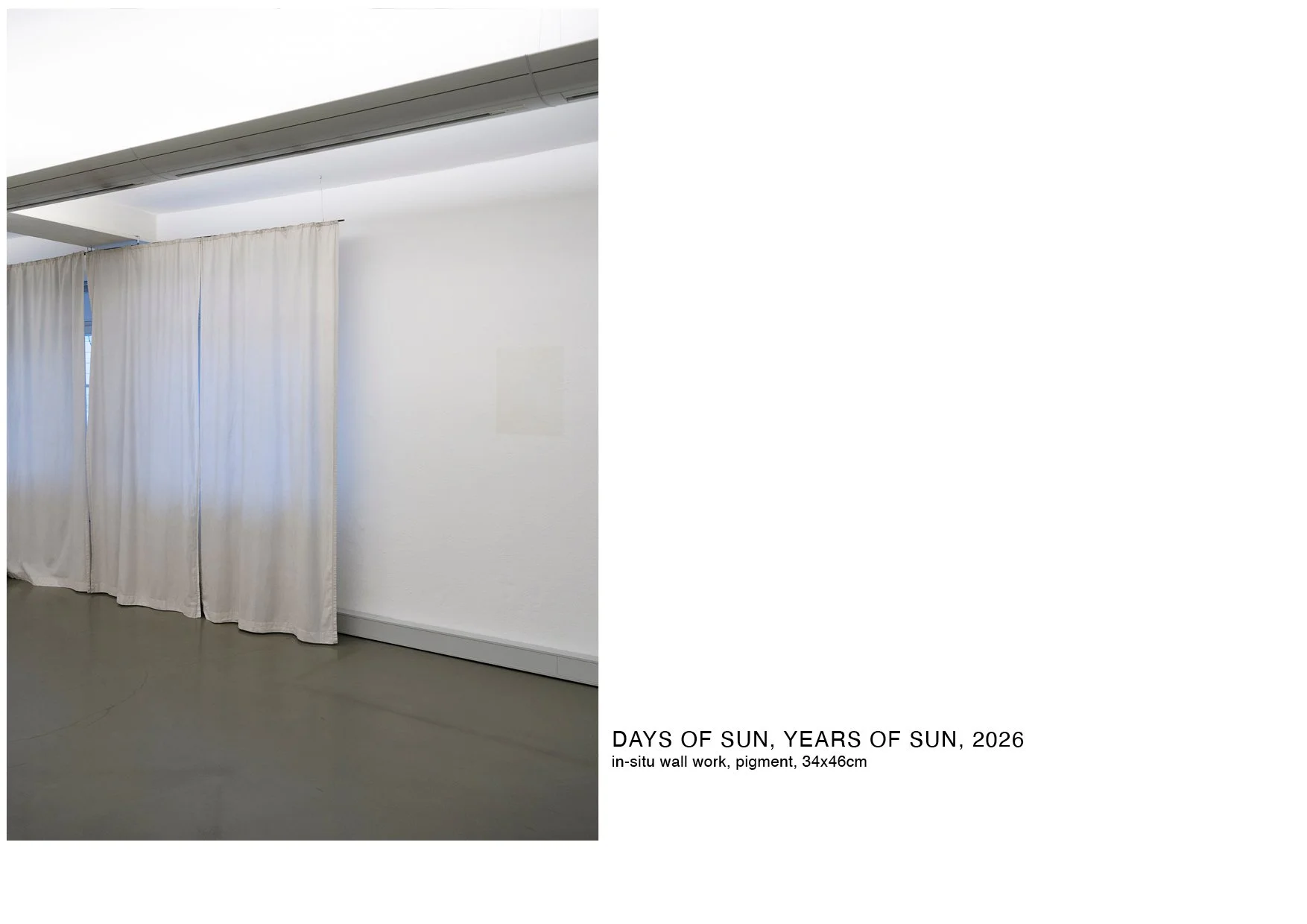
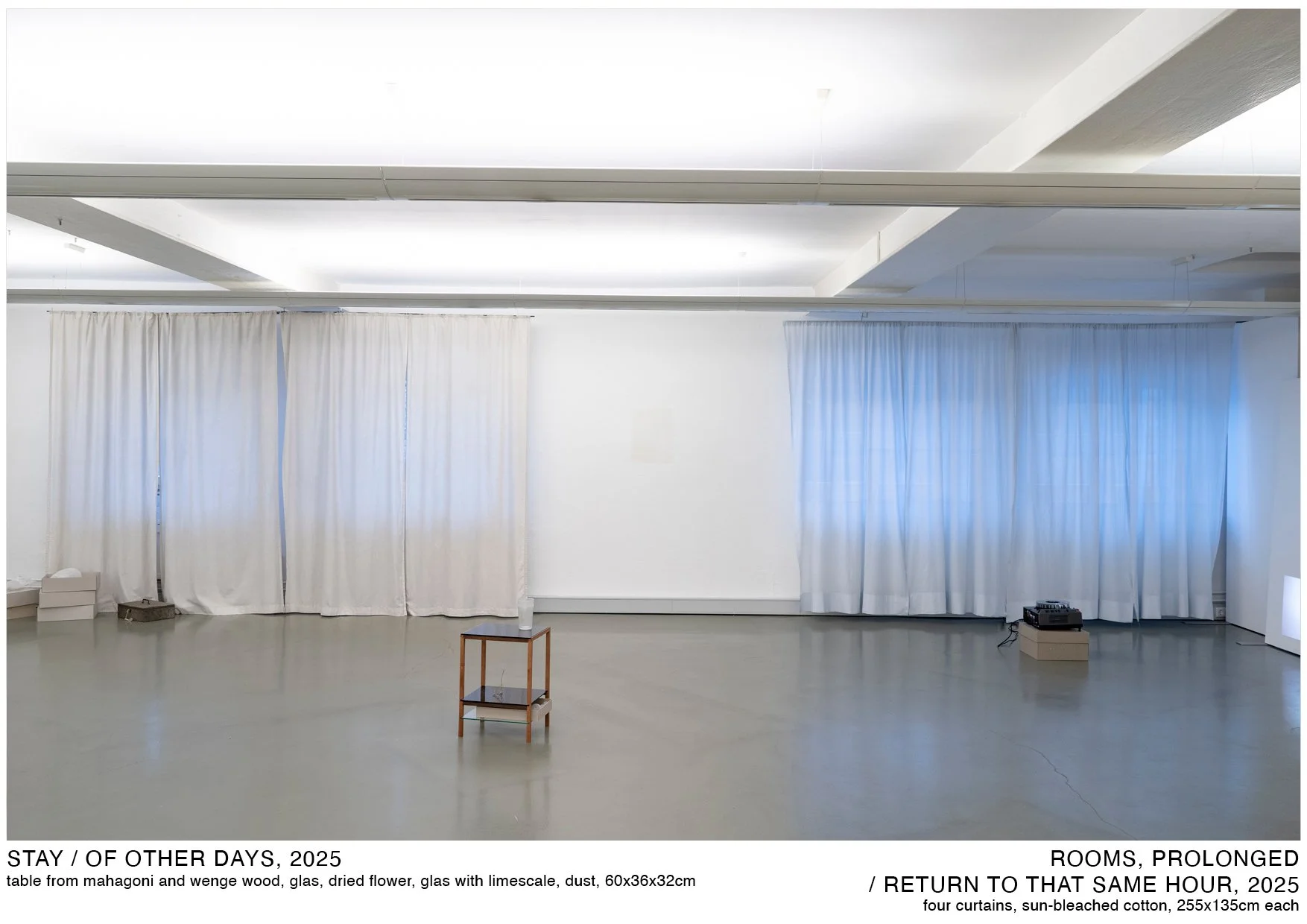
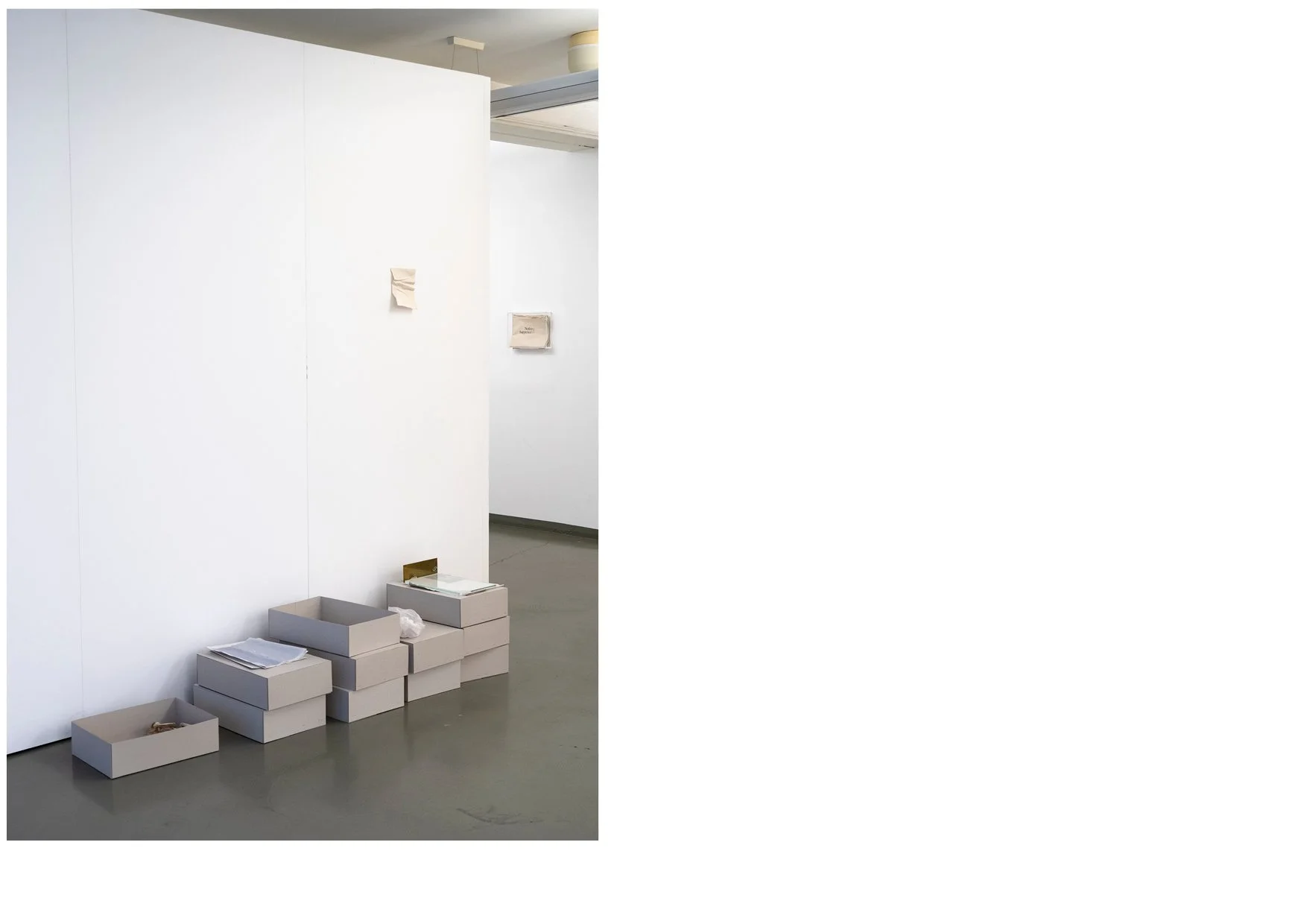
The exhibition understands space as a temporary condition and, at the same time, in its continuity: as a layering of different temporalities, as a carrier of traces, sequences, and memories. Held in a state of pictorial stillness, the exhibition space becomes an intimate storage site in which the inventory of the house and that of the artists accumulate. The physical archive as a place of permanence is contrasted with the deliberate provisionality of the exhibition space and the home. Both are arranged in the awareness of their eventual dissolution—as temporary, unstable spaces that will themselves vanish, along with the memories they contain.
The publication ‘Untitled (A single sequence)’ (A4, 96 pages, without a cover), was produced alongside the exhibition. Like an abstract exhibition essay, the book gathers loose text fragments in form of listings, that translate the spatial situation into language. The text evokes the idea of everything that has ever been in this space being present at once—as if the different times from which the objects originate were accumulating and overlapping within the room. It asks what it would mean to stay, not having to leave behind the habits and unconscious movements tied to familiar spaces. In this way, an idea of ‘home’ emerges as a continuous point of reference that, like an archive, endures over time.
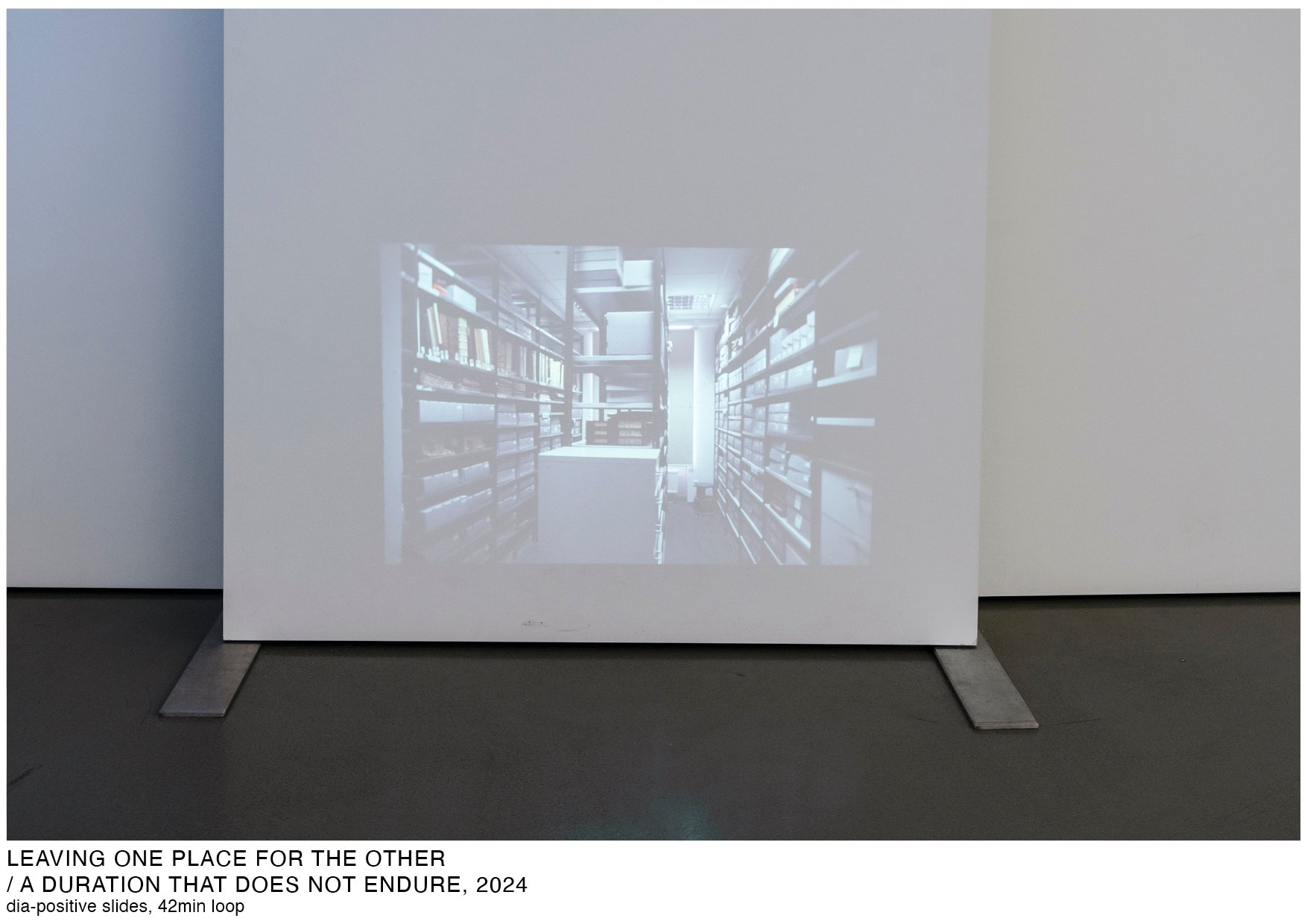
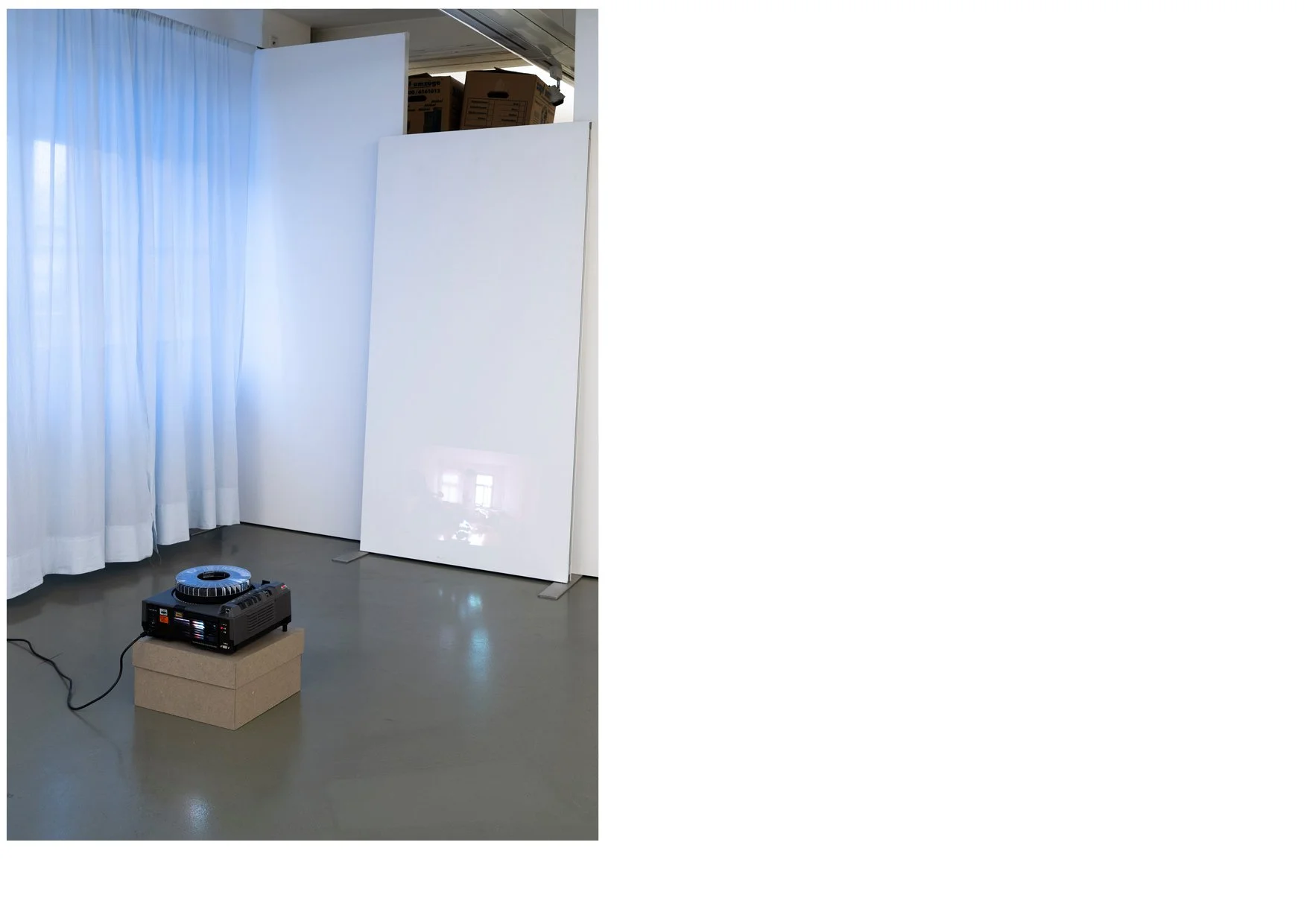
‘Leaving one place for the other / A duration that does not endure’ comprises photographs of rooms in which I slept during the production period of the exhibition, photographs of the archive rooms and storage depots of the Haus der Stadtgeschichte, and photographs of two rooms during moving in and out, visualising the de- and re-contextualisation of personal belongings.
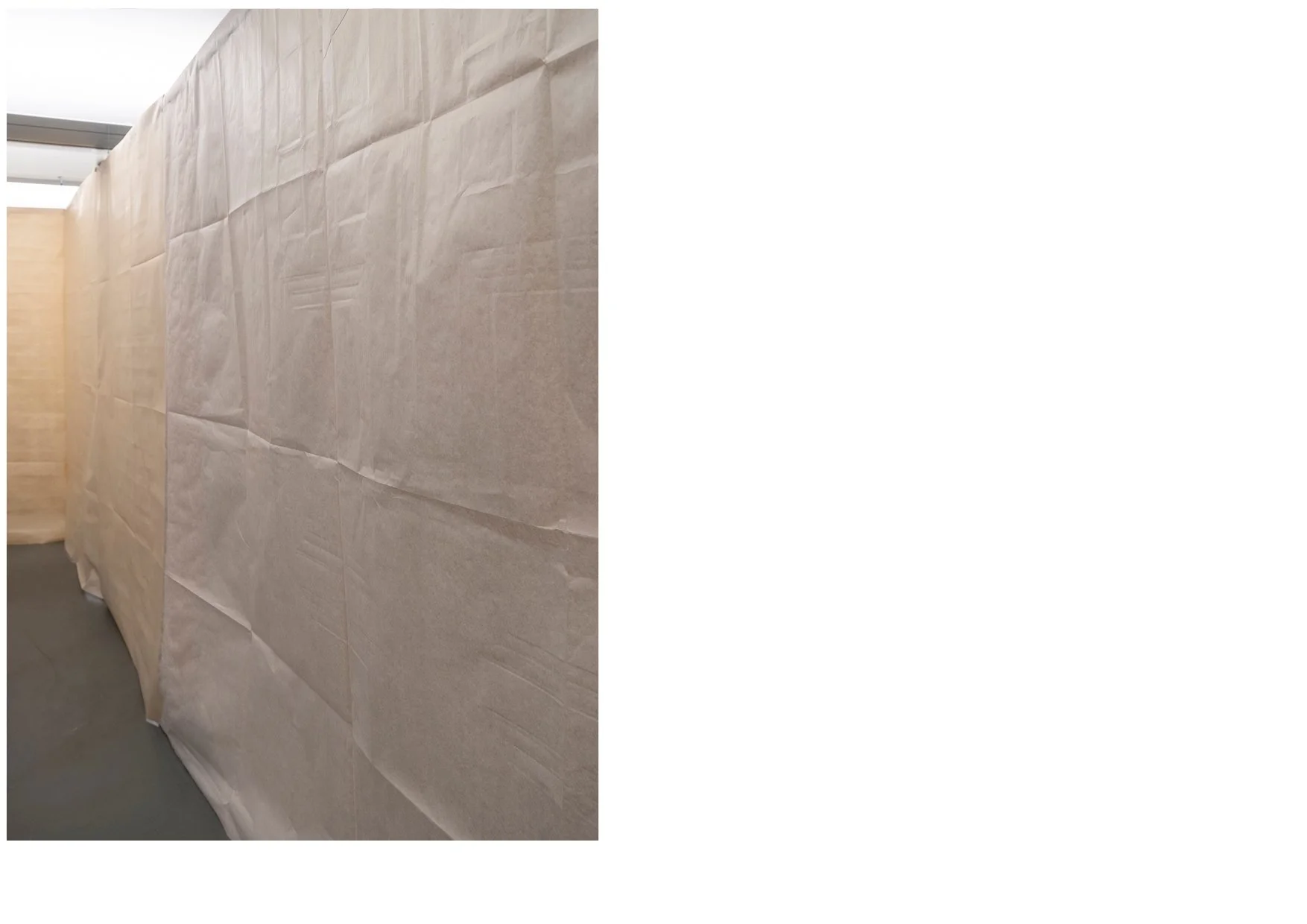
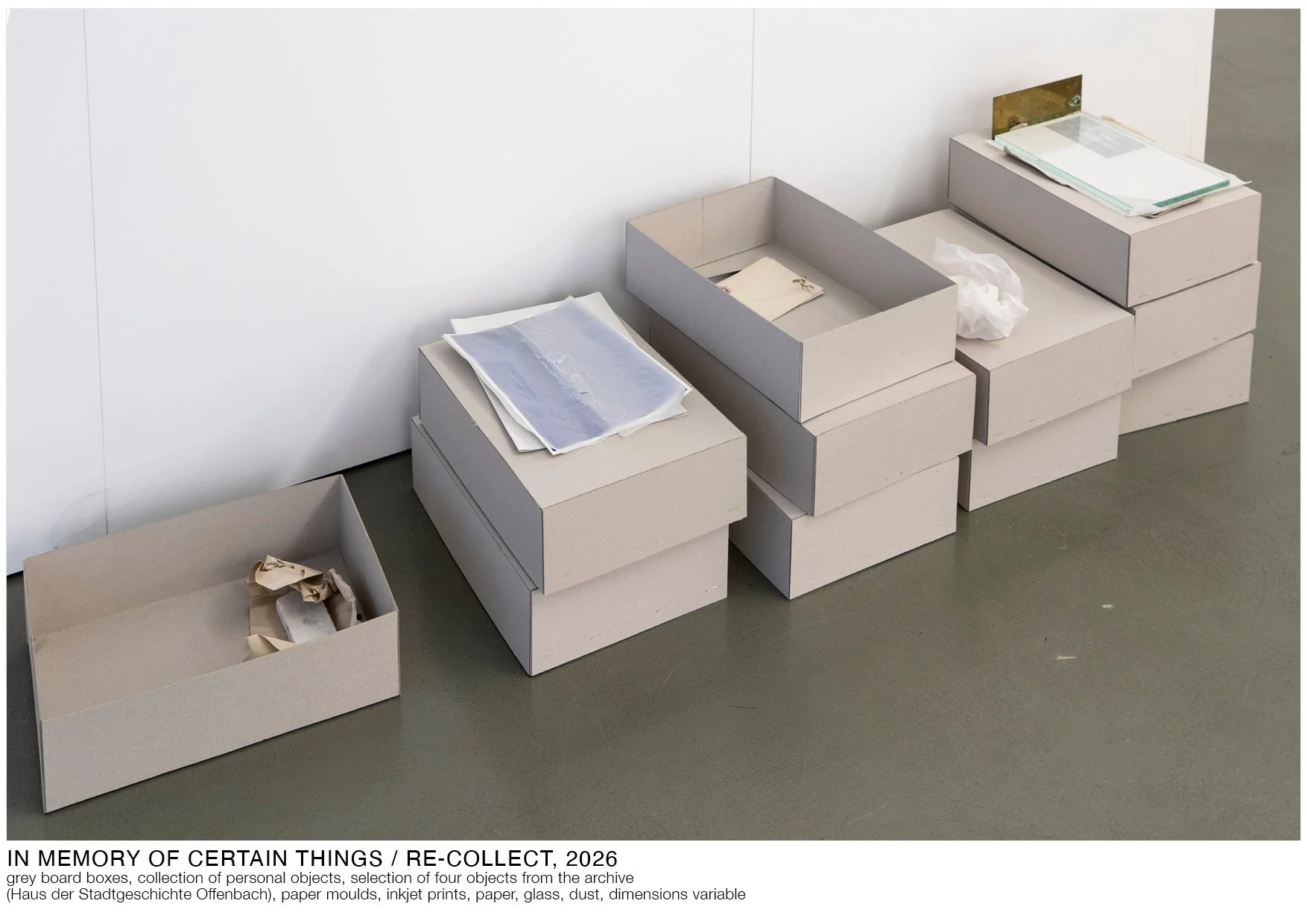
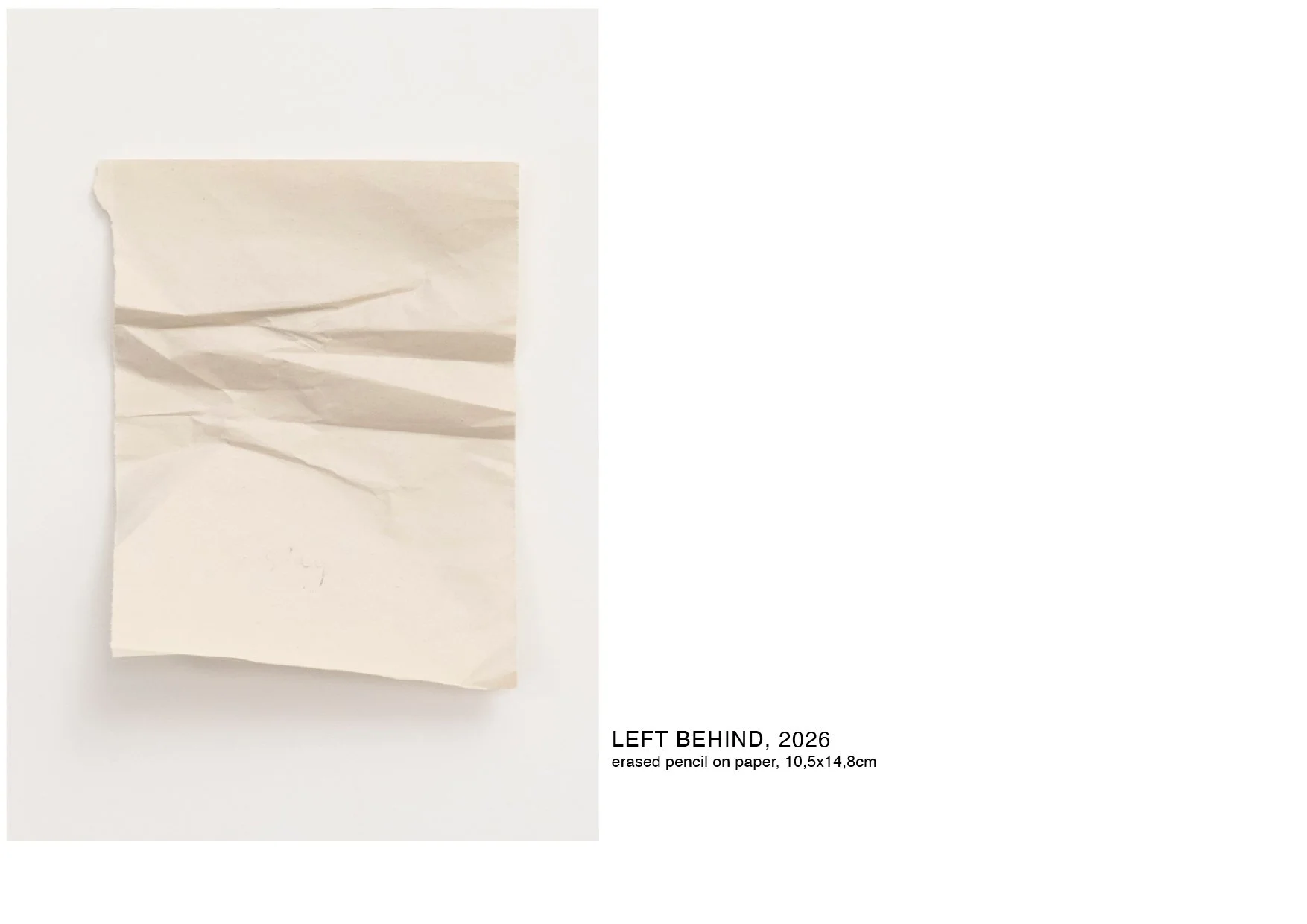
‘In memory of certain things / re-collect’ assembles both, personal objects as well as items from the archive collection of the Haus der Stadtgeschichte, of which some re-appear in photographs that show them in their original contexts: in storage depots where formerly personal belongings are preserved, or in private interiors. Among them are a set of 31 keys, a parasol from the 1880s/90s, a document casket from around 1850, and a soap box from the 1930s. Paper serves as a packing material for fragile objects and retains its shape after the move. Like the objects themselves, these paper coverings become fragile carriers—empty shells of personal memory.
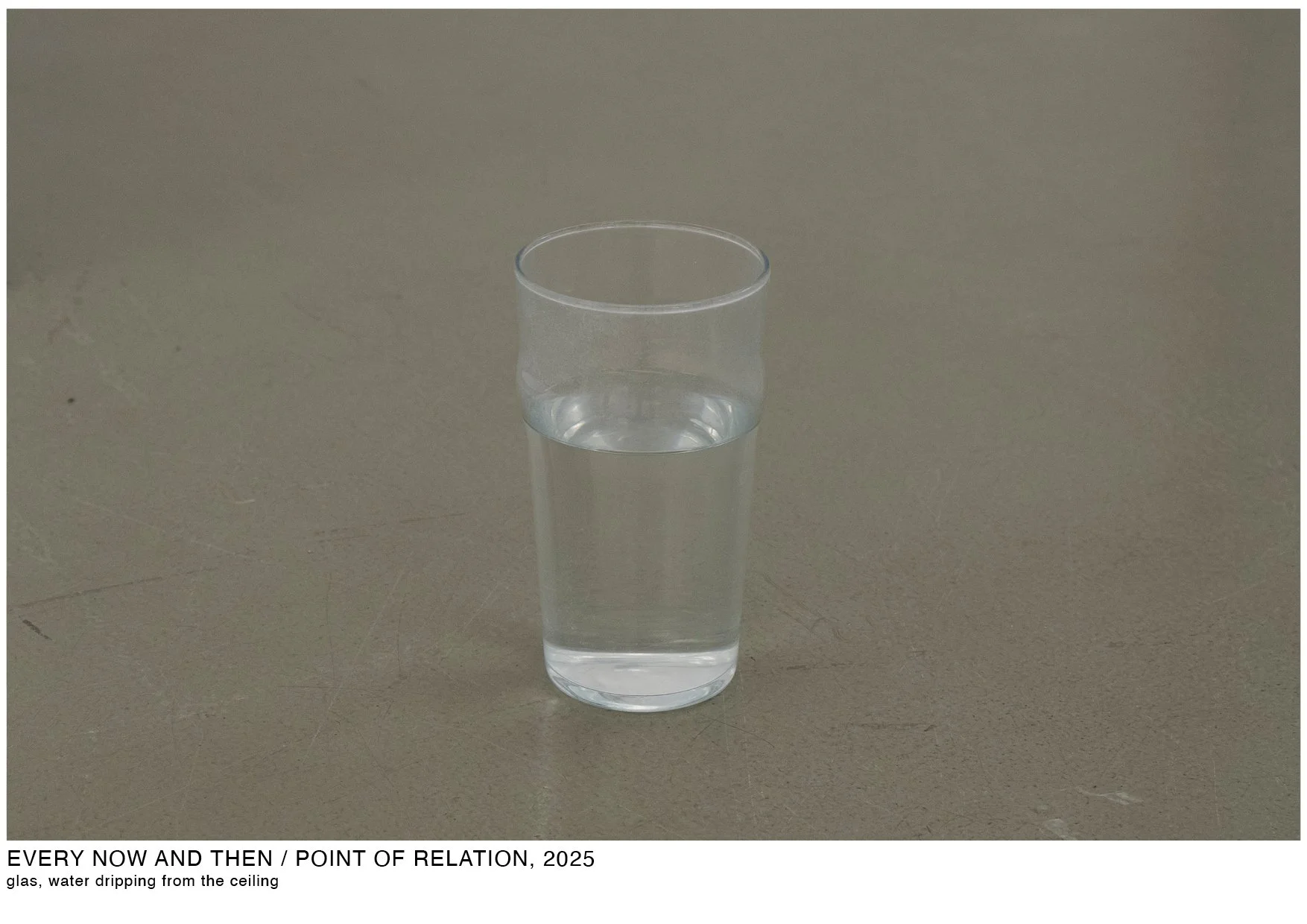
In the radio-transmitted sound piece ‘Home, one day (record)’ (2h49min), a recording of an ordinary day in a domestic interior can be heard: movements, the creaking of wooden floorboards, the presence of a person who seems to be overheard unnoticed. Occasionally, a few casually played piano notes interrupt the silence, marking moments of deliberate sound creation. This soundscape from that other room heard in the radio merges with the sounds in the exhibition space: the clicking of the slide projector, the ticking of the thermohygrograph, and the sound of a drop of water falling from the ceiling into a glass.